A Keepsake Box That Tells One Small Story
A keepsake box for one shared memory is easier to revisit when each object has a clear role, the arrangement gives helpful context, and a note fills gaps.
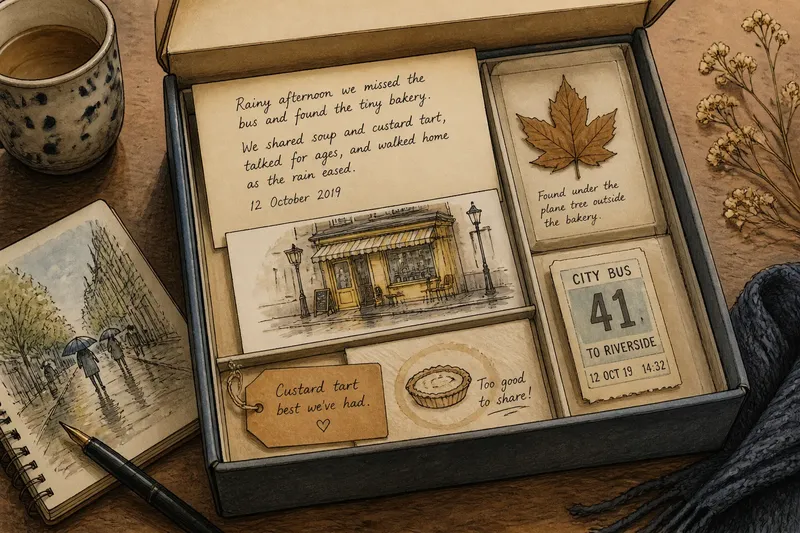
A keepsake box for one shared memory works best when its objects point to the same moment, not simply to the same person. A ticket, a folded map, and a note can make an afternoon legible years later if you choose them for the details they preserve and arrange them with a little context.
The aim is not to collect everything. It is to keep a small, understandable trace of what happened and what made it matter. Start with the story you want the box to tell, then let that story guide what stays.
Which memory belongs in the box?
Choose a memory you can describe in one plain sentence. “The rainy afternoon we missed the bus and found the tiny bakery” gives you a useful boundary; “our years together” is too broad to help you decide what belongs.
One small story might be a picnic at a familiar park, a day spent making something at home, or a visit to a neighborhood market. The event need not be grand. A specific detail—a surprising turn, a shared joke, a sound or smell—often gives the memory its shape.
Write a working sentence before you gather anything. If an object does not help someone understand that sentence, it may belong in a different box or nowhere at all.
What should you keep?
Keep objects that show what happened, where it happened, or how the people involved experienced it. A useful mix might include one item tied to the place, one made or used during the event, and one small record of a personal detail.
For a visit to a botanical garden, that could be a paper admission ticket, a plant label picked up from the ground only if it was already meant to be taken, and a short note about the bench where you stopped. A photograph can help, but it does not need to carry the whole story.
Look for pieces that are distinctive and sturdy enough to keep. A receipt may show the café you visited, while a napkin doodle may recall what you talked about. If an item is fragile, dirty, damp, or likely to mark other contents, leave it out or preserve it separately using suitable materials.
Ask yourself these questions as you sort:
- Does this object connect directly to the chosen memory?
- Would its purpose or meaning be clear to someone who was not there?
- Does it add a detail that another object does not already show?
- Can it be stored without damaging the other keepsakes?
- Would a short note explain it better than keeping the object itself?
When an item is too bulky, ordinary, or difficult to store, a photograph or a written description may keep the relevant detail without making the box crowded. The decision is about preserving the story, not saving every object associated with it.
How many objects feel right?
Keep only enough objects to make the memory recognizable. A box that is packed to the lid can make each piece feel interchangeable; a few distinct items give the eye room to notice their relationship.
Say you and a friend spent a drizzly afternoon at a used-book shop and walked home with a paper bag of books. You might keep the shop’s bookmark, a small sketch of the window display, and a note describing the book you both debated. The bookmark anchors the place, the sketch recalls what caught your eye, and the note supplies the conversation; extra receipts and unrelated purchases would add little.
Lay possible objects out on a table before putting them away. Remove anything that repeats a detail already represented, and notice whether the remaining group still tells a coherent story.
How can the arrangement explain the connection?
Arrange the objects in an order that a future reader can follow. A simple sequence might move from the place, to the activity, to the detail you still talk about; the order can be physical rather than chronological if it reads more clearly.
Use a shallow box with a lid, such as an archival-quality storage box, when the contents are mostly paper. A small fabric-covered box may suit sturdy objects, while clear sleeves can keep tickets or notes visible without handling them repeatedly. Avoid forcing objects into a tight space or stacking anything that could bend.
Place the most immediately recognizable object near the top. Put smaller pieces in paper envelopes or labeled sleeves, and keep related items together. A simple paper divider can separate a note from a ticket without adding visual clutter.
Do not make the layout so precious that nobody can look inside. Leave enough room to lift each item, and consider taking a photograph of the arrangement before closing the box if returning objects to their original positions matters to you.
What should the note say?
A short note should identify who, where, and what the objects refer to, then add one detail the objects cannot explain. Include names that will make sense later, the place’s name, and a season or approximate time if you remember it.
Write for someone who may not share your memory—including your future self. “The blue ticket is from the ferry ride after lunch; we took the long route because we had time” gives more help than “best day.” Keep the language natural rather than trying to turn a small outing into a grand account.
If you are unsure of a detail, say so instead of filling the gap with a guess. A note can also explain an object’s role: “We used this paper map to find the garden entrance.” That small line can keep a seemingly ordinary scrap from becoming a mystery.
How do you keep the story readable?
Use a label on the outside of the box that names the memory in a few words. “Rainy walk to the bakery” is more helpful than “Miscellaneous keepsakes,” and it lets the box remain distinct if you make others later.
Inside, put the note where it will be seen before the objects are moved. If a detail is easy to forget, add a caption to the relevant sleeve rather than writing directly on a delicate item. Pencil on a separate archival card is often a practical option for paper-based collections.
Consider what a person who was not present would infer. If the objects could suggest several different events, add a sentence that links them. The box should offer clues, not require someone to guess the connection from a pile of artifacts.
What questions come up later?
Can photographs go in a keepsake box?
Yes, if they help tell the same small story and are stored so they do not stick to other surfaces. A loose print can sit in a photo sleeve, while a digital image can be referenced in the note with a clear description of where you keep it.
Should I keep sentimental objects that do not fit?
Keep them elsewhere if they matter, but do not make this box carry every memory at once. A separate container or a simple list of related keepsakes can preserve the wider connection without blurring this box’s story.
What if another person remembers the event differently?
Make the note personal rather than presenting it as the only account: “I remember us choosing the back path” leaves room for another person’s version. If the box is shared, invite them to add a short note of their own, dated or signed so the voices remain clear.
How should I store the box?
Keep it somewhere dry, out of direct sunlight, and away from strong temperature changes. For unusual materials, delicate objects, or items with care labels, follow the maker’s guidance or ask a qualified conservator for advice.
When is the box finished?
The box is ready when its objects make sense together and the note supplies the missing context. You do not need to fill every corner or add a decorative flourish; an uncluttered arrangement can be easier to revisit and kinder to the objects.
Read the note once with the box closed, then open it and see whether the objects support the story you described. If one piece feels unrelated, remove it or explain its connection. A keepsake box for one shared memory earns its place by making that moment easier to recognize—not by holding the most things.