Pencil, Pen or Collage for a Ten-Minute Sketch?
Choose pencil, pen or collage for a ten-minute sketch by matching the medium to the details you notice, then make a small scene easier to remember.
A ten-minute sketch feels different depending on whether you bring a pencil, a pen or a few scraps of paper. For a ten-minute sketch, choose the tool that matches the kind of attention you want to give a small scene: pencil follows changing shapes, pen asks you to commit, and collage turns looking into a search for pieces.
You do not need to finish a picture or make a polished record. A mug on a windowsill, a pear beside the sink or a bus shelter in the rain can be enough. The point is to spend a brief stretch noticing what is actually there, then leave with a small mark that helps the scene stay in mind.
Three kinds of looking
A pencil makes revision easy. Its soft marks can move from a faint outline to a darker edge, so your attention may wander between the object and the page. It suits scenes where proportions or shadows matter more than crisp details, such as a houseplant leaning toward a window.
A pen makes each line more decisive. That can feel freeing when you want a clear record without fussing over every shape, though it can also make you look more carefully before drawing. A ballpoint, felt-tip or fineliner each leaves a different sort of line; use what you already have rather than waiting for a perfect kit.
Collage changes the task from drawing lines to choosing shapes and colors. You might tear a paper bag for a table, use a piece of an old envelope for a shadow, or cut a colored patch from scrap paper. It draws attention to the scene’s broad relationships—light against dark, one shape beside another—rather than to fine detail.
None is the serious option and none is the shortcut. Pencil can be direct, pen can be playful, and collage can be exacting. The useful question is what you feel like noticing today.
Match the medium
Let the scene make the first suggestion. If its outline is the part you keep glancing at, reach for a pencil. If one strong contour or gesture holds it together, choose a pen. If the scene is mostly blocks of color or overlapping shapes, collage may give you a more satisfying starting point.
Your surroundings matter, too. A small sketchbook and pencil are easy to use on a park bench, while a pen is handy if you want a compact setup. Collage needs paper pieces and a way to attach them, so it tends to suit a kitchen table, a library work surface where making materials are allowed, or another place where scraps can stay put.
Think about your mood rather than trying to rank the media. When you are tired, a pen can remove the temptation to erase; when you feel uncertain, pencil marks can be adjusted; when you are bored with outlines, arranging torn paper can redirect your attention. These are invitations, not rules. You can switch if your first choice makes the scene harder to see.
A week of small scenes
Try the three approaches across an ordinary week, using scenes already in your path. Keep the same modest time limit and use a different medium on separate occasions. This is not a challenge to complete a set; it is a way to notice how the tool changes what catches your eye.
- On a quiet morning, use pencil. Sit with a cup or fruit bowl and lightly map the largest shapes first. Spend the remaining minutes noticing which edge, shadow or overlap makes the arrangement recognizable.
- On an errand break, use pen. Choose a safe place to sit or stand without blocking anyone. Draw a compact view—a planter beside a doorway, for instance—and let a few confident lines carry the scene.
- At home on another day, try collage. Pick a small still life and collect a few pieces from clean scrap paper, packaging or an old envelope. Tear or cut shapes, arrange them, and attach them with a glue stick if one is available.
- Near the end of the week, repeat your favorite. Find a different subject but use the medium that made you look most closely. Notice whether you now begin with an outline, a decisive mark or a search for color.
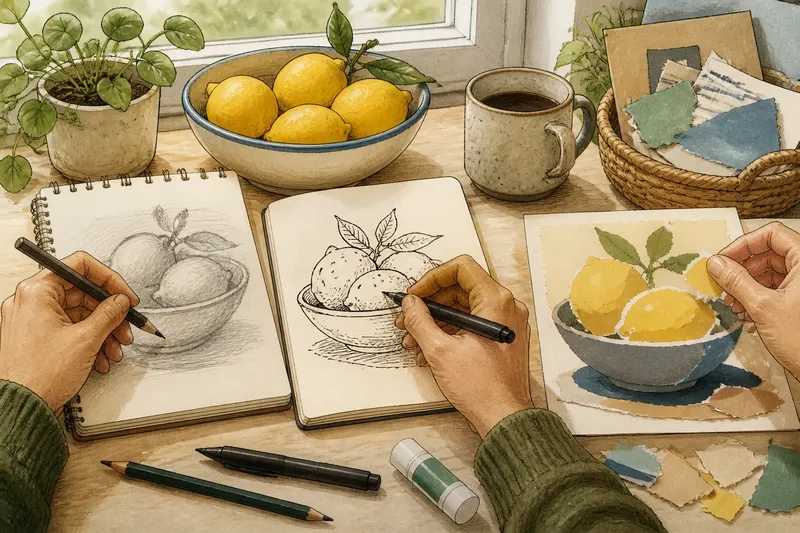
Say you have ten minutes before a friend arrives and a bowl of lemons on the counter. If you choose pencil, you might lightly trace the bowl and follow the curved shadows; the expected result is a loose record of form. With pen, you could draw the rim and a few leaf-like stems in unbroken marks, leaving the result spare. With collage, you could place yellow paper shapes against a darker scrap for the bowl; the scene becomes a study in color and contrast. Each approach records the same arrangement, but asks you to pay attention differently.
Keep the session light
Set out only what your chosen medium needs before you begin. A pencil and scrap paper are enough for a quick drawing; a pen and pocket notebook work just as well. For collage, gather a small handful of scraps and a glue stick, or simply arrange pieces without attaching them if you do not want a permanent page.
Choose one main subject and a view you can hold comfortably. You do not need to draw every object on a crowded table. Let the cup, plant or window frame be the anchor, and include only the nearby shapes that explain its position.
When the time is up, stop even if the page feels unfinished. Add a short note if a sound, smell or passing detail mattered: “rain ticking on the awning” or “orange peel beside the knife.” The note can preserve something the picture does not, without turning the session into a writing exercise.
If you lose your place, look away from the paper and name three visible shapes silently. Then return to the one that seems most useful. That small reset is often enough to restart without judging the drawing or adding more tools.
Questions worth asking?
Which medium is easiest to carry?
A pencil or pen and a small notebook usually take little space and are simple to put away. Collage can travel too, but loose scraps and adhesive are easier to manage where you have a steady surface.
Can I combine pencil and pen?
Yes, if combining them keeps the session enjoyable rather than turning it into a search for a perfect finish. You might sketch a faint outline in pencil, then add a few pen marks for the edges that matter most.
What if I dislike the result?
Keep it as a record of what held your attention, or use the back of the page for another attempt. If you prefer not to save it, the act of looking still counts; the sketch does not need to become a keepsake.
Does collage require special supplies?
No: clean paper scraps, scissors or your hands, and a glue stick can be enough. If you are using found or printed material, choose pieces you have permission to reuse and avoid anything that could leave a mess in a shared space.
Notice what remains
After a few sessions, look at the pages without scoring them. A pencil sketch may remind you of a shape, a pen drawing of a particular gesture, and a collage of the colors that made the scene feel distinct. That difference can help you choose the next medium by curiosity rather than habit.
Keep the pages together if you want a small record of ordinary days, or let them go if that feels lighter. For your next ten-minute sketch, the pencil, pen or collage choice can be a quiet prompt: do you want to follow a shape, commit to a line or build a scene from pieces?